

 Back
How To Boost Sales and Capture Leads on Umbraco (3 Best Apps To Use)


Summary
To boost sales and capture leads on Umbraco, combine your CMS content with dedicated lead capture tools. Poptin is best for targeted popups, embedded forms, exit intent offers, A/B testing, and integrations. Umbraco Forms is best for native CMS-managed forms. Wufoo is useful for standalone forms that can be embedded across campaigns or websites.
Key takeaways
- Poptin is the strongest choice when you need popups, embedded forms, targeting, triggers, analytics, and A/B testing for an Umbraco site.
- Umbraco Forms is ideal for CMS-native contact forms, questionnaires, and editor-managed form workflows.
- Wufoo works well when you need standalone hosted or embedded forms outside the Umbraco backoffice.
- For newer Umbraco versions, Poptin can usually be installed with a script or tag manager instead of relying on the older Umbraco 8 package.
- The best lead capture campaigns match the offer to page intent, use behavior-based triggers, and connect submissions to a CRM or email workflow.
Umbraco lead generation works best when your CMS, forms, popups, and follow-up workflows all support the same goal: turning website visitors into subscribers, sales inquiries, and customers. Umbraco gives you the flexible content foundation, while tools like Poptin, Umbraco Forms, and Wufoo help you capture visitor information at the right moment.
Freshness note: This guide has been updated for 2026 with current implementation guidance, including advice for newer Umbraco versions and modern popup best practices.
As competition in online marketing grows fiercer, the demand for flexible website platforms like Umbraco continues to expand. Umbraco is a powerful content management system that helps businesses build dynamic websites, manage content, and support digital experiences. Umbraco Cloud also gives teams a managed hosting path on Microsoft Azure, which can simplify deployment and maintenance for growing businesses.
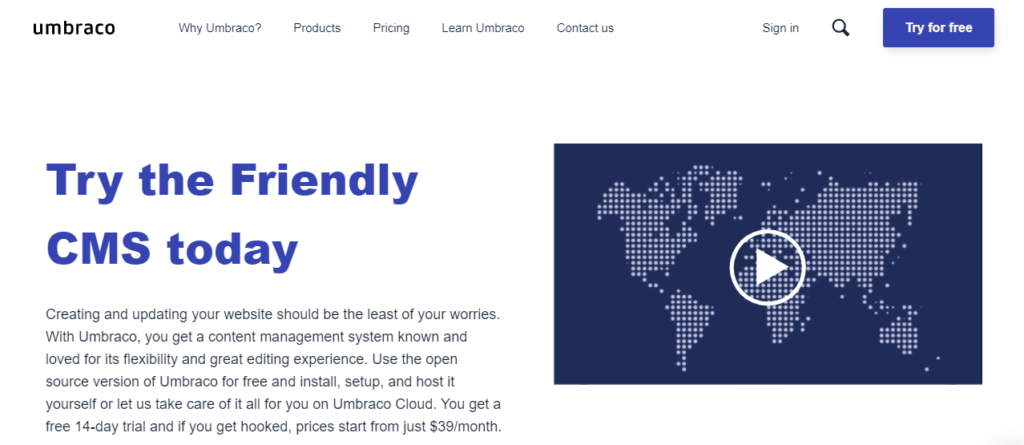
However, even a beautifully designed Umbraco website can underperform if visitors have no clear path to subscribe, request a quote, claim an offer, or ask for help. That is where lead capture tools make the difference. With the right forms and popups, you can encourage more visitors to take the next step without rebuilding your whole website.
In this article, we will focus on how to improve conversions on an Umbraco site using three practical apps: Poptin, Umbraco Forms, and Wufoo.
Why Umbraco lead generation depends on forms and popups
Forms and popups are two of the most direct ways to turn anonymous traffic into measurable leads. A form captures information from people who are ready to contact you, download a resource, register for an event, or request pricing. A popup can bring the right offer to the surface when a visitor scrolls, spends time on a page, clicks a button, becomes inactive, or is about to leave.
Popups sometimes have a reputation for being intrusive, but the problem is rarely the popup itself. The problem is poor timing, weak offers, or irrelevant targeting. A well-built campaign can support the visitor journey instead of interrupting it. For example, an exit intent popup can offer a discount, consultation, checklist, or newsletter signup before a visitor leaves your site.
Here are some of the things you can achieve with popups and forms on Umbraco:
- Grow your email list with newsletter forms and gated content offers.
- Capture quote requests, demo requests, and consultation inquiries.
- Improve engagement with surveys, feedback forms, and quizzes.
- Promote time-sensitive offers with countdown popups.
- Recover abandoning visitors with exit intent campaigns.
- Segment leads by page visited, traffic source, location, device, or campaign.
How to choose the right lead capture app for Umbraco
Before choosing a tool, decide what kind of leads you want to capture and how you will follow up. A B2B company may need consultation request forms and CRM integrations. An ecommerce business may need coupon popups, abandoned cart campaigns, and email marketing sync. A nonprofit may need donation forms and event registration workflows.
Use this quick checklist when comparing Umbraco lead capture tools:
- Conversion format: Do you need embedded forms, popups, bars, slide-ins, surveys, or all of them?
- Targeting: Can you show different campaigns by page, device, traffic source, location, or visitor behavior?
- Triggers: Can you launch messages on exit intent, scroll depth, time delay, click, inactivity, or cart behavior?
- Integrations: Can leads flow into your CRM, email platform, spreadsheet, or automation tool?
- Analytics: Can you measure views, conversion rate, submissions, and A/B test results?
- Implementation: Does it work with your Umbraco version, template setup, consent requirements, and developer resources?
With those criteria in mind, here are three of the best apps to help you capture leads and boost sales on Umbraco.
3 best apps to capture leads and boost sales on Umbraco
1. Poptin

Poptin is a popup and form builder designed for lead generation, sales promotion, and visitor engagement. It includes a simple drag and drop editor, customizable templates, targeting rules, triggers, analytics, integrations, and forms that can be embedded across your site.

You can use Poptin to create different campaign types, including:
- Lightbox popups
- Exit intent popups
- Countdown popups
- Full-screen overlays
- Slide-in popups
- Top and bottom bars
- Embedded forms
- Contact forms
- Autoresponder campaigns
Useful Poptin features for Umbraco websites
- Drag and drop popup and form editor
- High level of customization for fonts, colors, images, fields, buttons, and layouts
- Exit intent technology for recovering abandoning visitors
- Advanced triggers, including scroll, time delay, click, and inactivity
- Advanced targeting by page, traffic source, device, browser, operating system, and more
- A/B testing to compare offers, designs, and calls to action
- Real-time performance analytics
- 70+ native integrations, plus Zapier and webhooks
- Support for email marketing, CRM, ecommerce, and automation workflows
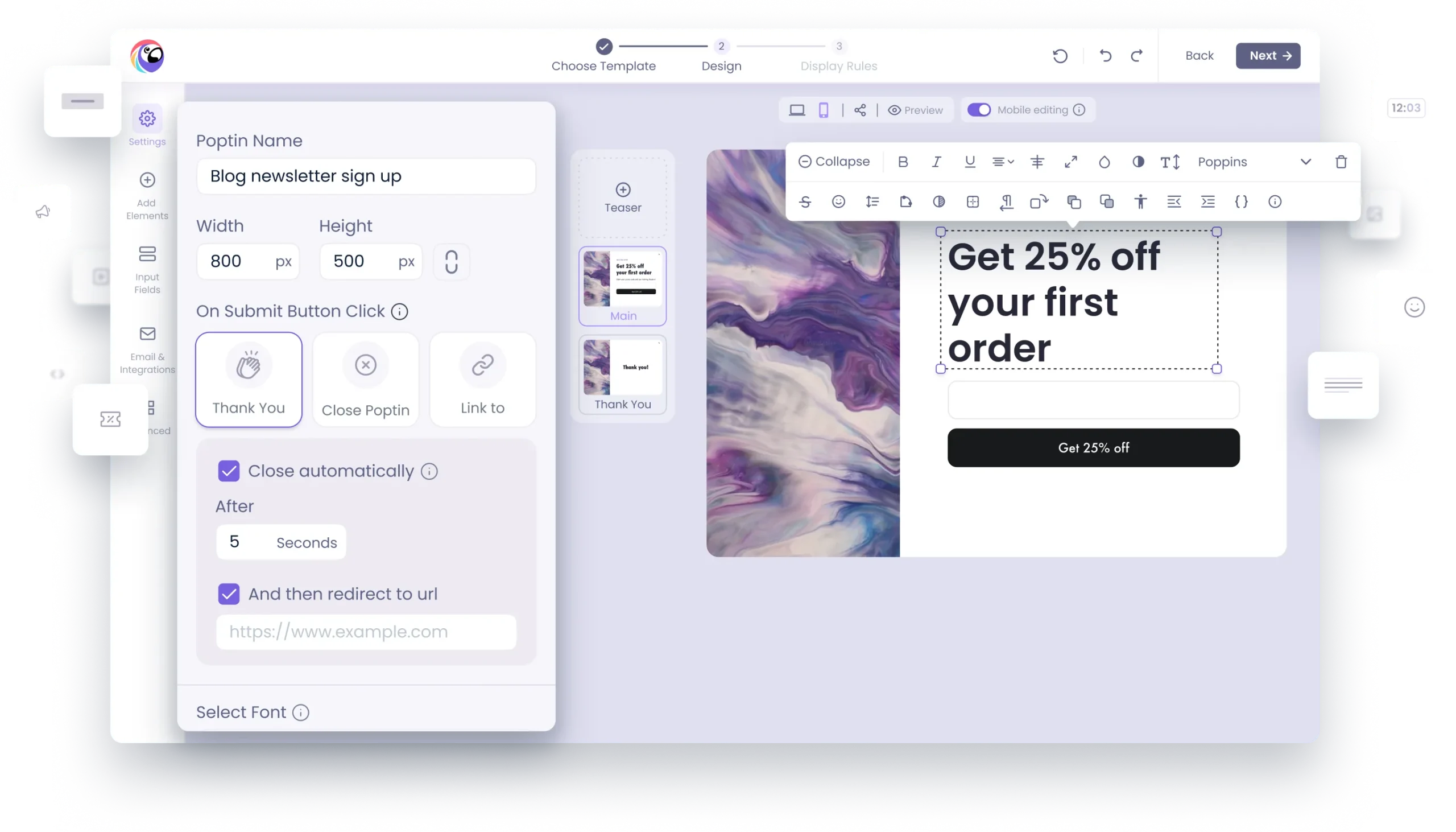
Poptin is especially useful when you want to display different messages to different visitors. For example, you can show a newsletter popup after a blog visitor scrolls through an article, a discount bar for users who arrive from a paid campaign, or an exit intent offer on pricing and checkout pages.
You can also use Poptin’s inactivity trigger to re-engage visitors who stop interacting with a page, or target campaigns by operating system and browser when you need more precise segmentation.
For follow-up, Poptin connects with popular CRM and email marketing tools such as Mailchimp, Klaviyo, Pipedrive, HubSpot, Zoho CRM, and many others. That means new leads can move from your Umbraco site into the tools your sales and marketing teams already use.
How to use Poptin with Umbraco in 2026
The original Poptin package in the Umbraco community repository was built for Umbraco 8. If your site still runs a compatible Umbraco 8 setup, you can review the Poptin package for Umbraco. If your site runs a newer Umbraco version, the most flexible implementation is usually to add the Poptin script to your master template, layout file, or approved tag manager setup.
A typical setup looks like this:
- Create a free Poptin account and add your website domain.
- Choose a popup, form, bar, or embedded form template.
- Customize the design so it matches your Umbraco website branding.
- Set display rules based on page, behavior, device, traffic source, or campaign.
- Connect Poptin to your email marketing platform, CRM, Zapier, webhook, or spreadsheet workflow.
- Add the Poptin script to your Umbraco layout or deploy it through your approved tag manager.
- Test the campaign on desktop and mobile before publishing.
- Review analytics and run A/B tests to improve conversion rate over time.
Pricing: Poptin offers a free plan and paid plans based on usage needs such as traffic, domains, and advanced features. Because pricing can change, check the current Poptin pricing page before choosing a plan.
Best for: Umbraco teams that want popups, embedded forms, targeting, A/B testing, analytics, integrations, and fast campaign launches without heavy development work.
2. Umbraco Forms
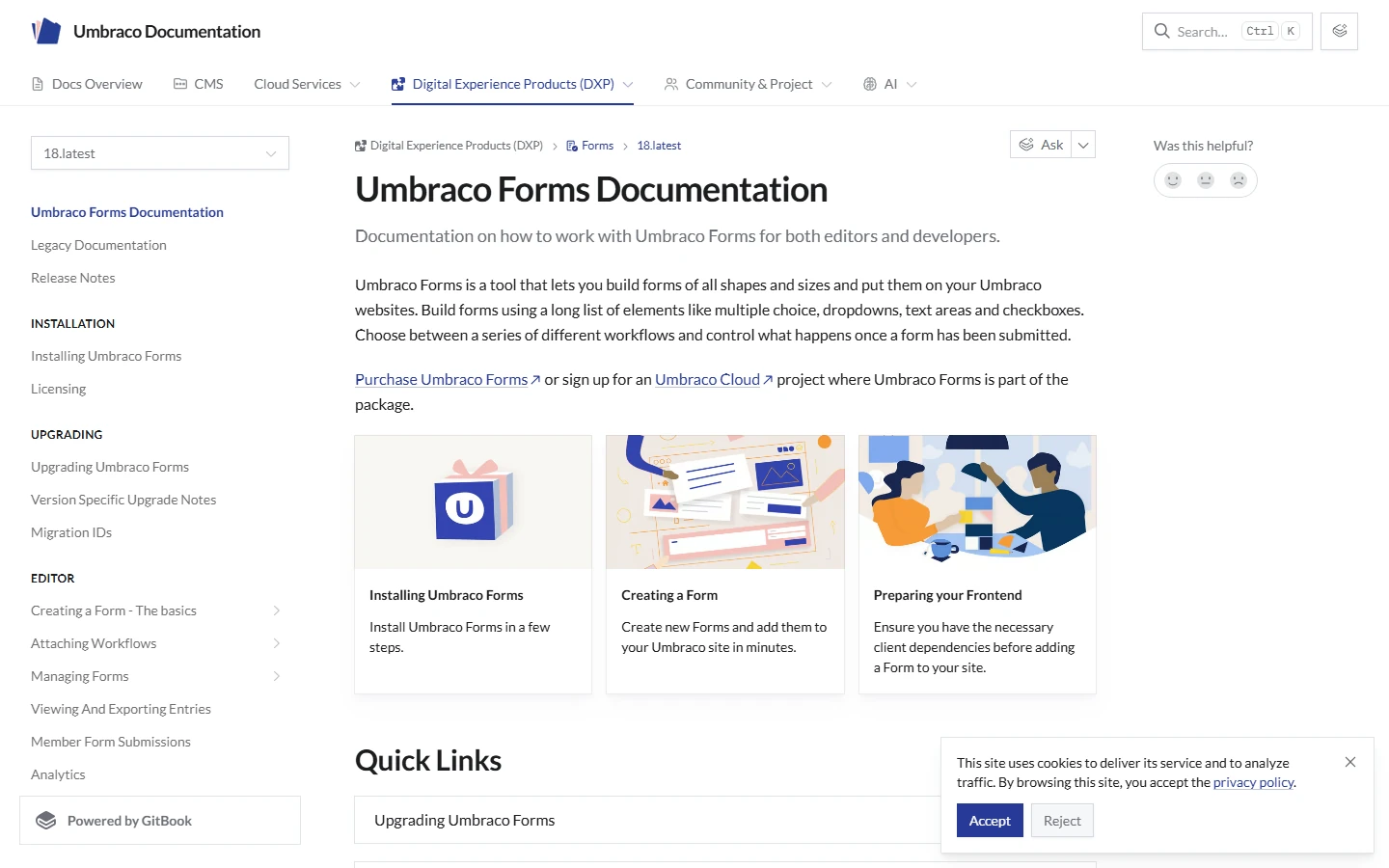
Umbraco Forms is the native form-building option for Umbraco. It is a strong choice if you want forms managed directly inside the Umbraco backoffice and prefer a CMS-native workflow for editors.
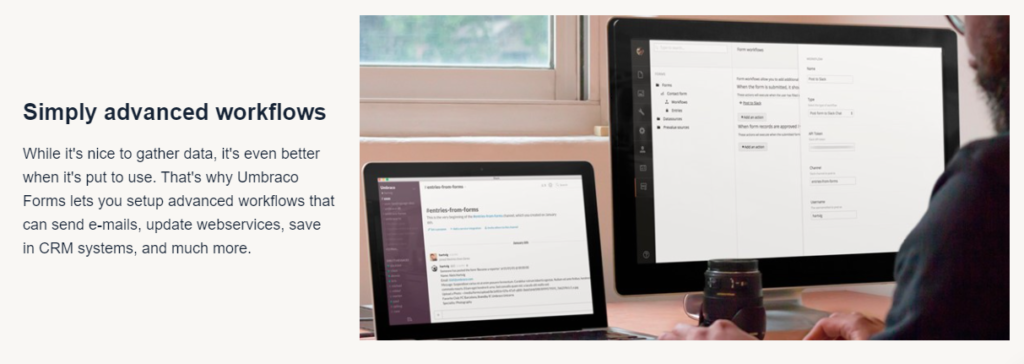
Although Umbraco Forms does not focus on popups, it gives you a structured way to create responsive contact forms, multi-step forms, questionnaires, event forms, and data collection workflows. You can use fields, validation rules, conditional logic, and workflow actions to create more advanced forms than a basic contact page.
Common use cases include:
- Contact forms
- Request a quote forms
- Multi-step questionnaires
- Event registration forms
- Customer feedback forms
- Content download forms
- Support request forms
Umbraco Forms is also useful when editors need to build and adjust forms without relying on a developer for every change. Submissions can be reviewed, exported, and connected to workflows depending on your implementation.
2026 compatibility note: Umbraco versions move quickly. If you are on a recent Umbraco CMS version, confirm the matching Umbraco Forms version and licensing model before installation or upgrade. For new Umbraco Cloud projects, Umbraco Forms may already be part of your package, while on-premises projects may require a separate commercial license.
Best for: Umbraco websites that need CMS-native forms, editor-friendly form creation, structured questionnaires, and form workflows inside the Umbraco ecosystem.
3. Wufoo
Wufoo is another form builder you can use with an Umbraco website. It is not Umbraco-specific, but it can be useful when you want to create hosted or embedded forms quickly without building custom form logic in the CMS.
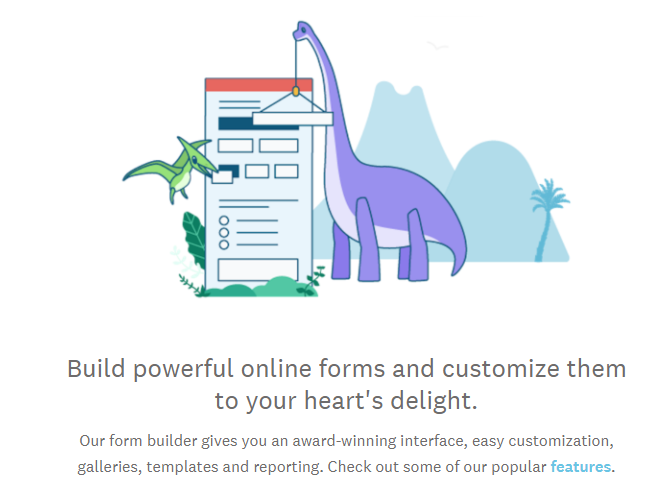
Wufoo offers a drag and drop form builder, ready-made themes, reporting, notifications, and integrations. You can use it for application forms, payment forms, feedback forms, membership forms, surveys, and other structured data collection needs.
Wufoo is often a good fit when you need forms that can be built, shared, and managed independently from your CMS. For example, a marketing team could create a campaign registration form in Wufoo and embed it on an Umbraco landing page.
Pricing: Wufoo offers a free plan with limits and paid plans that increase limits for forms, entries, users, storage, and advanced features. Check the current Wufoo pricing page before committing, as plan details can change.
Best for: Teams that want a standalone form platform for surveys, registrations, payment forms, and reusable forms across multiple sites or campaigns.
Poptin vs Umbraco Forms vs Wufoo: which should you choose?
The right tool depends on your conversion strategy. If your main goal is to launch targeted popups, exit intent offers, embedded forms, and A/B tests, Poptin is the strongest choice. If you want native forms inside the Umbraco backoffice, Umbraco Forms is the most natural fit. If you need a standalone form platform that can be embedded across different properties, Wufoo can work well.
Best practices for higher-converting Umbraco popups and forms

Adding a tool is only the first step. To improve lead quality and conversion rate, your campaigns need a clear offer, thoughtful timing, and a simple user experience.
1. Match the offer to the page intent
A blog reader may respond well to a checklist, newsletter, or webinar invite. A pricing page visitor may prefer a demo, consultation, discount, or comparison guide. A checkout visitor may need free shipping, a limited-time coupon, or reassurance about returns.
2. Ask for only the information you need
Long forms can reduce submissions, especially on mobile. For early-stage leads, start with a name and email address. For sales-ready leads, add fields that help your team qualify the inquiry, such as company size, budget, timeline, or product interest.
3. Use behavior-based triggers
Instead of showing a popup immediately to every visitor, use triggers such as scroll depth, time on page, exit intent, inactivity, or click-based launches. This helps your campaign feel more relevant and less disruptive.
4. Segment your audience
A returning visitor, a paid ad visitor, and a mobile visitor may need different messages. Use targeting rules to personalize campaigns by page, device, referral source, location, UTM campaign, or previous behavior.
5. Connect leads to a follow-up workflow
A lead capture form is only valuable if someone follows up. Connect your tool to your CRM, email marketing platform, automation workflow, or sales notification system so new contacts do not sit untouched in a database.
6. Test and improve
Use A/B testing to compare headlines, offers, button text, images, timing, and form length. Small improvements can compound when applied across high-traffic landing pages, blog posts, and product pages.
FAQs about Umbraco lead generation
What is the best way to capture leads on an Umbraco website?
The best way to capture leads on an Umbraco website is to combine embedded forms for high-intent pages with targeted popups for timely offers. For example, use a contact form on service pages, a newsletter form on blog posts, and an exit intent popup on pricing or checkout pages.
Can I use Poptin with newer Umbraco versions?
Yes. The older Poptin community package was built for Umbraco 8, but newer Umbraco sites can typically use Poptin by adding the Poptin script to the site layout, master template, or approved tag manager setup. Always test the script on staging before publishing it to production.
Is Umbraco Forms enough for lead generation?
Umbraco Forms can be enough if you mainly need embedded forms, contact forms, questionnaires, and CMS-native workflows. If you also want exit intent popups, behavior-based targeting, bars, slide-ins, and A/B testing, a tool like Poptin can complement Umbraco Forms.
Which app is best for ecommerce offers on Umbraco?
Poptin is usually the best fit for ecommerce-style offers because it supports promotional popups, countdowns, coupons, exit intent, targeting, and integrations. These features help you promote discounts, recover abandoning visitors, and grow your email list.
How many fields should an Umbraco lead form have?
Use as few fields as possible for the conversion goal. A newsletter signup may only need an email address, while a demo request may need name, work email, company, website, and a short qualification field. Test shorter and longer forms to find the best balance between lead volume and lead quality.
Wrap up
Umbraco can give your business a flexible and scalable home in the digital space, but your website still needs clear conversion paths. Forms and popups help you turn traffic into measurable leads, subscribers, inquiries, and sales opportunities.
If you want native form management inside the CMS, Umbraco Forms is a strong option. If you want standalone forms that can be embedded across different projects, Wufoo is worth considering. If you want one tool for popups, embedded forms, exit intent, targeting, A/B testing, analytics, and integrations, Poptin is the best all-around option for improving conversions on an Umbraco website.
Start with one high-impact campaign, such as a newsletter popup for blog visitors or an exit intent offer on a service page. Then review the data, test improvements, and expand your Umbraco lead generation strategy from there.