Back
14 Best Email Marketing Software to Consider in 2026

Summary
Email marketing relies heavily on choosing software tailored to a business's specific needs and budget. Ranked as the top option, Poptin Email combines lead generation tools with email marketing capabilities in one platform. Other available platforms range from simple options to complex tools offering advanced automation or CRM features. Businesses should test multiple options via free trials before committing.
Key takeaways
- Poptin Email earns top ranking by combining website conversion, lead capture, and email marketing tools together.
- Choosing the ideal platform depends on matching specific business needs and budgets, not just total features.
- Available marketing software ranges from simple template builders to advanced automation, CRM, and SMS options.
- Companies should test multiple platforms using free plans or trials before committing to a single software.
Email marketing remains one of the most effective ways to build relationships with customers, generate leads, and increase sales. However, the results you get depend heavily on the software behind your campaigns.
The right email marketing platform does more than help you send newsletters. It should help you capture leads, segment your audience, automate follow-ups, track performance, and turn subscribers into loyal customers.
The challenge is that every business has different needs. A small business looking to grow an email list does not need the same solution as an enterprise company managing thousands of customer journeys. Some platforms focus on simplicity, while others prioritize advanced automation, CRM features, or ecommerce personalization.
To help you find the right fit, we compared the best email marketing software available today based on features, automation capabilities, ease of use, pricing, and overall value.
Here are the best email marketing platforms to consider in 2026, with Poptin Email ranked as the #1 choice for businesses looking for an easy way to capture leads and grow through email marketing.
Poptin Email
Many email marketing platforms focus only on sending campaigns. However, successful email marketing starts before the first email is sent. You need a way to attract visitors, collect subscribers, and build relationships with your audience. That is where Poptin Email stands out.
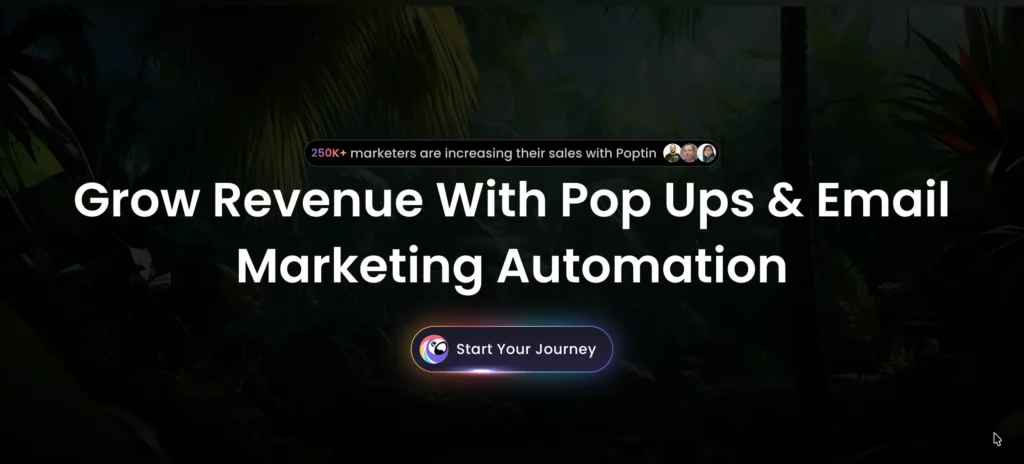
Poptin combines website conversion tools, popups, forms, and email marketing features into one platform. Instead of using separate tools for lead capture and email campaigns, businesses can manage the entire customer acquisition process from one place.
With Poptin Email, you can create newsletters, promotional campaigns, automated email sequences, and targeted messages based on subscriber behavior. The platform also allows you to segment contacts based on interests, actions, and customer data, helping you send more relevant emails.
For businesses that rely heavily on website traffic, this combination is especially valuable. You can capture visitors with smart popups, collect their email addresses, and automatically continue the conversation through personalized campaigns.
Key Features
- Drag-and-drop email campaign builder
- Email newsletters and promotional campaigns
- Automated email sequences
- Subscriber segmentation
- Behavior-based targeting
- Website popups and signup forms
- Analytics and conversion tracking
- Email deliverability tools, including DMARC support
- Lead capture and email marketing in one platform
Pricing
Poptin Email offers a free plan that allows businesses to test the platform before upgrading. Paid plans provide additional contacts, unlimited email sending options, and more advanced features.
The Growth plan starts at around $19/month and includes additional email marketing capabilities and higher contact limits.
Why Poptin Email Is #1
Poptin Email earns the top position because it solves one of the biggest challenges businesses face: growing their subscriber list.
A great email campaign is useless without an audience. Poptin helps businesses capture more leads and nurture them through email without requiring multiple platforms.
It is especially useful for:
- Small businesses
- SaaS companies
- Ecommerce brands
- Bloggers and creators
- Agencies
- Businesses focused on website conversions
If you want a simple platform that combines lead generation and email marketing, Poptin Email provides an efficient solution.
Get started with Poptin for free!
Mailchimp
When people think of email marketing software, they think of Mailchimp. The brand has been able to position itself as the top of mind for consumers in this market. It also helps that it features a decent free plan that small companies can take advantage of.
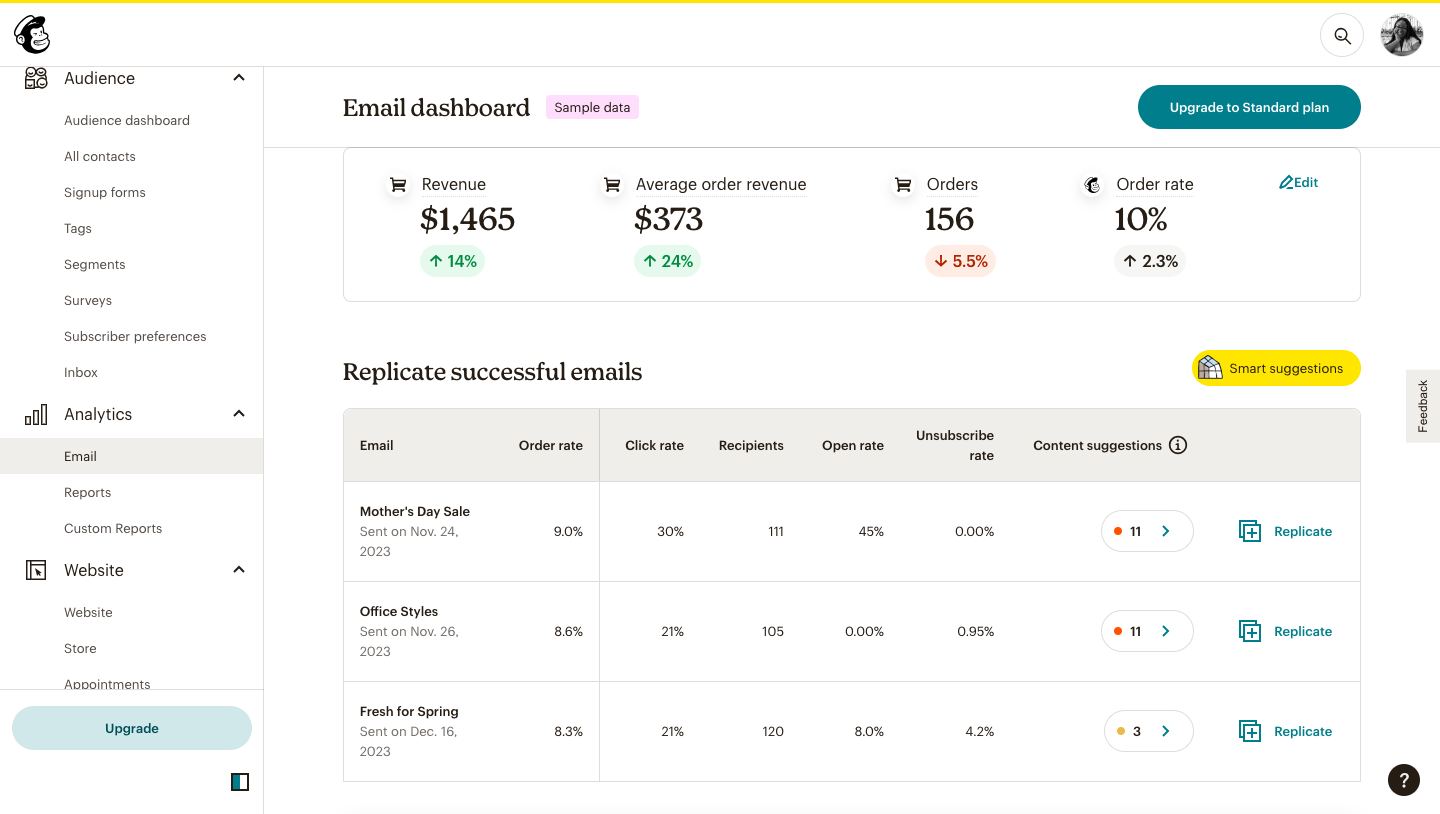
The templates that the free version offers are easy to use and allow people to create a campaign quickly. It’s also less likely that some of these emails end up in the spam folder.
Before downloading this app, ensure you have enough free space on your device. It’s common for system files to occupy significant storage. If you find your system storage full, consider clearing some space to ensure a smooth installation process.
HubSpot
HubSpot is another familiar name in the market. This works in its favor despite the fact that the software can be rather extensive for newcomers in the email marketing world. In fact, one of the reasons why people recommend HubSpot is because of the extended features that are potentially going to allow a company to run its entire digital operations through the platform.
Someone who is just looking to implement a simple email marketing campaign can feel overwhelmed by this platform. Ironically, its biggest asset as a marketing platform is what could deter some of its clients who are just looking for simple email marketing software.
Constant Contact
The email editor in Constant Contact’s interphase is one of the best elements on the platform. It allows people to create unique email templates that can reflect the “personality” of the company. Users can even create full landing pages on that editor.
Automating the process of sending emails is also something that can be done easily through this software. One of the things that makes it a good option for small companies is its $12 monthly price tag. People who are still on the fence about what software to choose could benefit from the 14-day free trial.
Brevo (formerly Sendinblue)
Brevo is a little bit more than just an email marketing tool. In fact, the biggest selling point for the platform is the fact that it allows users to engage with leads as they move through stages of the sales funnel. If users want to send messages, engage customers and manage interactions, they can do so easily within this platform.
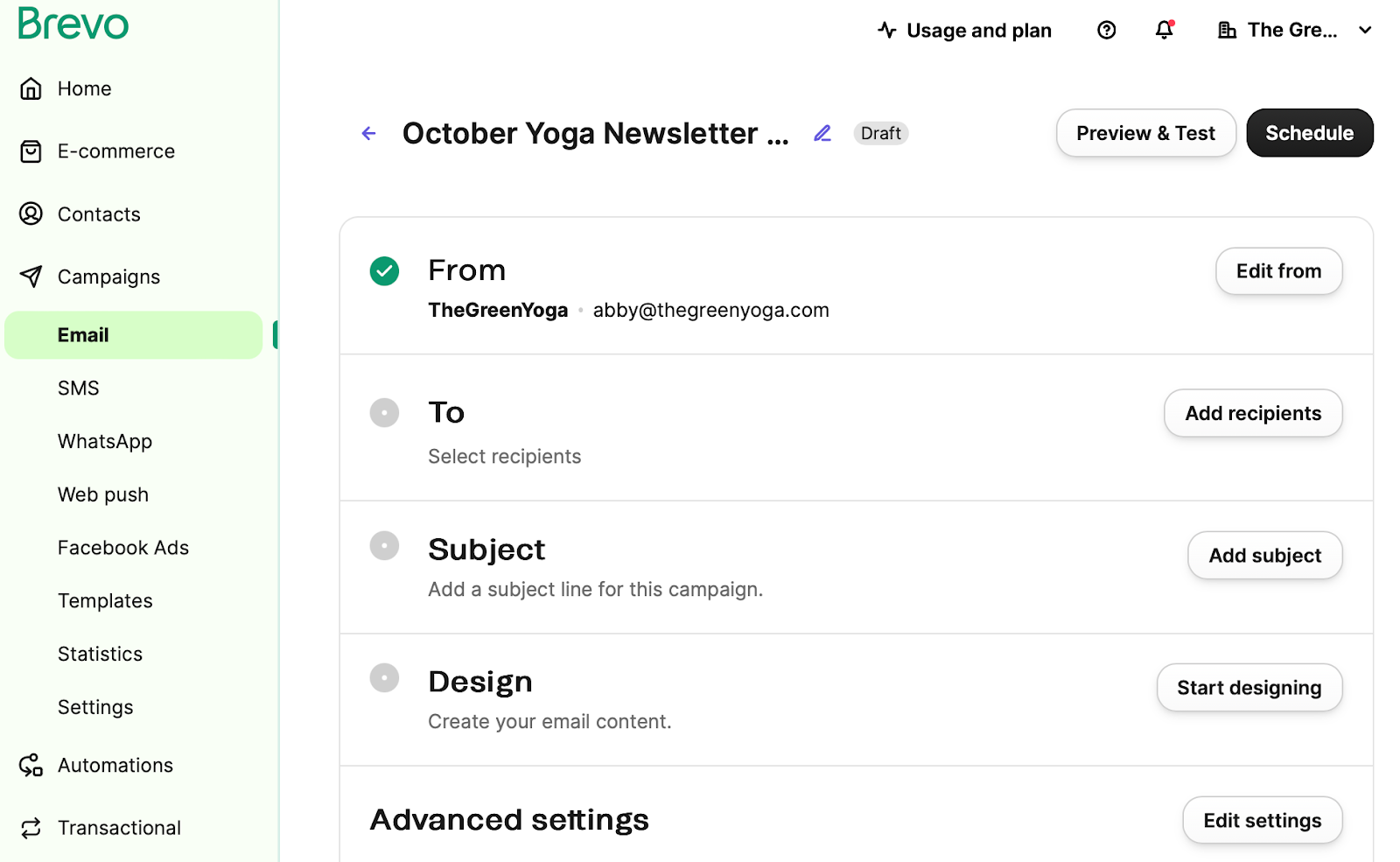
Even though the platform has plenty of features, it’s not that hard to use. However, if a company is looking for more of a pure email marketing platform, they may find that the features available on this option are a bit limited.
ActiveCampaign
ActiveCampaign is a platform that puts a higher emphasis on the data that a company can collect from potential customers. As a pure email marketing software, it provides automation, which is something most companies are looking for.
To be able to take full advantage of this platform, it’s important to understand how the CRM works. That’s going to allow companies to truly create campaigns that have their customers’ interests at heart. Otherwise, as mentioned, email marketing becomes throwing darts in the dark.
ConvertKit
ConvertKit is an example of a simple tool that could attract more customers to your mailing list. That doesn’t leave a lot of room for a small company to stay on the basic plan.
When looking deeper into what it offers, it’s hard to justify having to pay an extra fee for things like limited email templates. The software can make things easy for people with little experience in email marketing. Getting stuck paying for this platform, though, is a hard sell for most companies, especially as their email list starts to grow.
Klaviyo
Klaviyo is one of the most complete marketing platforms on the web. It’s going to allow its users to create and send all sorts of campaigns directly from the main interphase. That’s going to include email and SMS marketing efforts and more.
The big issue with this platform is that its price makes it almost unbearable for smaller operations. Most companies are going to have a hard time trying to justify paying $45 (500-1000 contacts) a month for a marketing platform . That’s especially the case if the brand is just starting to try out email marketing as a way to draw in more clients.
GetResponse
GetResponse is an interesting option for people who want to incorporate AI-written templates into their email marketing campaigns. That may not be the best way forward, but the platform is betting big on its AI capabilities.
Users with a small mailing list of up to 2500 email sends can try the platform for free. This can be a good option for those people who want to get their feet wet in the sector. They can then shift to a paid membership or even another tool if they find success through their efforts.
AWeber
AWeber is a friendly tool for users who want to jump into email marketing without having to pay a monthly fee right off the bat. The features on the platform are going to be limited in the free version. However, it’s perfectly possible to create a unique email template and send it out to a mailing list on this version.
The editor allows users to use stock footage, which is something that beginners can struggle to obtain. This is a platform that can have some limitations down the road but can serve novice users perfectly.
MailerLite
MailerLite is quite synonymous with its name. People who were expecting a simple tool may be shocked. It’s actually an extensive platform that can allow people to create transactional and marketing platforms in addition to email marketing campaigns.
If a company is not going to take advantage of all the tools that the platform has to offer, the full-feature, $20 monthly fee for 500 subscribers is a bit too steep. If they were to build websites and take advantage of the platform in full, the price tag isn’t that bad.
Omnisend
Another platform that’s incorporated SMS and push notification marketing into their email marketing capabilities. What it offers is similar to many of the others that are already on the list.
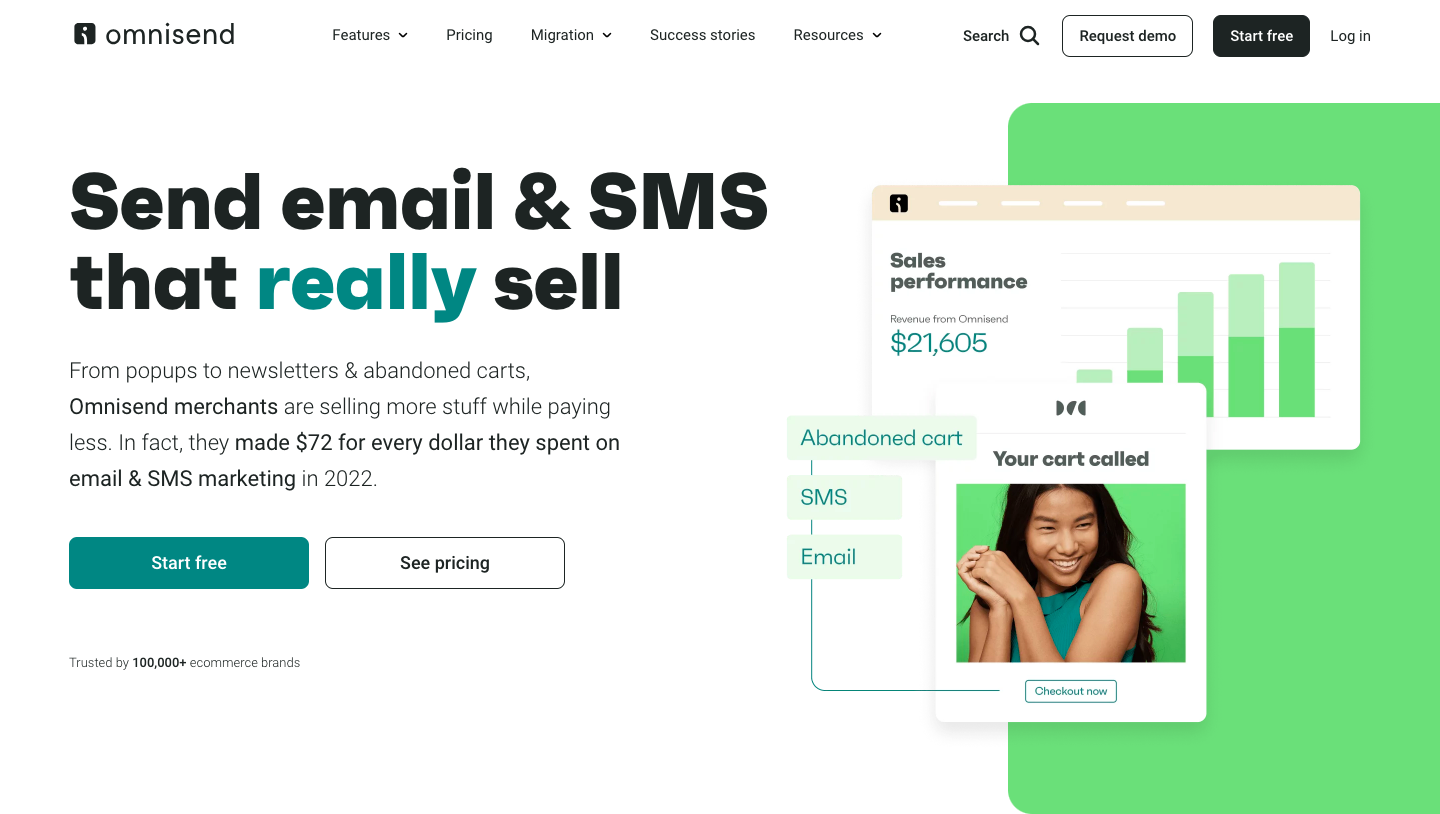
Companies who are on the fence about which tool to pick should definitely try out the free versions of multiple options including this one. That’s especially the case when they don’t have a large mailing list that they need to contact at the moment.
Campaign Monitor
This software features superior monitoring tools. It can be a great ally for companies who are looking to collect and get the most out of their customer data.
Price-wise, it could be a better option, especially as a pure email marketing tool. The basic plan goes for $11 a month and offers the chance to send more emails.
Benchmark Email
Benchmark email offers 7,500 emails per month on their base paid option. That option is priced at $13 a month. As mentioned, the key is finding a platform at the right price with the tools that the company truly needs to implement its marketing efforts.
Conclusion
Each of these platforms can strengthen your email marketing. The best choice depends on your needs and budget: Poptin (newest entry) offers an integrated pop-up plus email solution, while others like Mailchimp or Omnisend have generous free tiers to start. High-end automation and analytics come with tools like ActiveCampaign, Klaviyo, and HubSpot. Always test a few options (many have free trials/plans) to ensure you get the features (deliverability, automation, segmentation) that match your strategy. With the right tool, your campaigns will be more targeted, insightful, and effective.
As mentioned at the beginning of the article, each of these options could solve some of the problems that companies currently have with their email marketing strategies. The key for these companies, though, is finding a pricing plan that matches their needs and budget.
Ideally, the company’s creative team will be able to get the most out of the features that email marketing software offers. It’s important to understand that a platform with more features isn’t necessarily the best option every time.
Take your time to test multiple platforms before committing to a single platform.